It's not to state that there are no words and phrases connected to the Serbian, Bulgarian, as well as Russian common languages inside the language, but instead they were discouraged with a theory of "trying to get native material 1st".[ninety six]
These languages on the whole have e free phrase buy and are SVO languages.The subject in Balkan language may be pre verbal or put up verbal. A different linguistic phenomenon within the Balkan languages is the Pro- Fall or Null Matter. Balkan languages consequence as Professional- drop languages: they allow a Null matter in just their clauses. Beside this, the pro matter can be done within the subordinate clauses much too. We've analyzed in the Generative perspective this phenomenon, according to modern linguistic experiments. We found out that it is the verb Agreement, with its characteristics [+T,+AGR] which licenses the professional subject matter. In this framework We've analyzed not merely the clauses of some Balkan languages, and also their sentences. We learned that not all of the Null subjects from the subordinate clauses are pro-dropt. Some languages like Albanian and Italian Possess a Null Matter within their clauses, due to the fact both equally of these Use a abundant inflectional verbal process. We're going to examine What's going on Along with the Balkan languages, if they have or not Null Topics of their sentences. Critical terms: Sprachbund, Balkan languages, topic, composition, Professional- Fall, Null Matter.
This is demonstrated by illustrations from colloquial speech that happen to be the suggests of linguistic creative imagination. The illustrations originate from latest surveys with speakers of a number of Balkan languages. The contribution analyses a few of the methods of lexi- cal creativeness.
Qualitative procedures in form of elicitation have been used. The effects indicated indications of semantic bleaching and getting qualities of a particle in the usage of the Kurdish word and gave justification for the long run exploration concerning the etymology on the particles on Balkans.
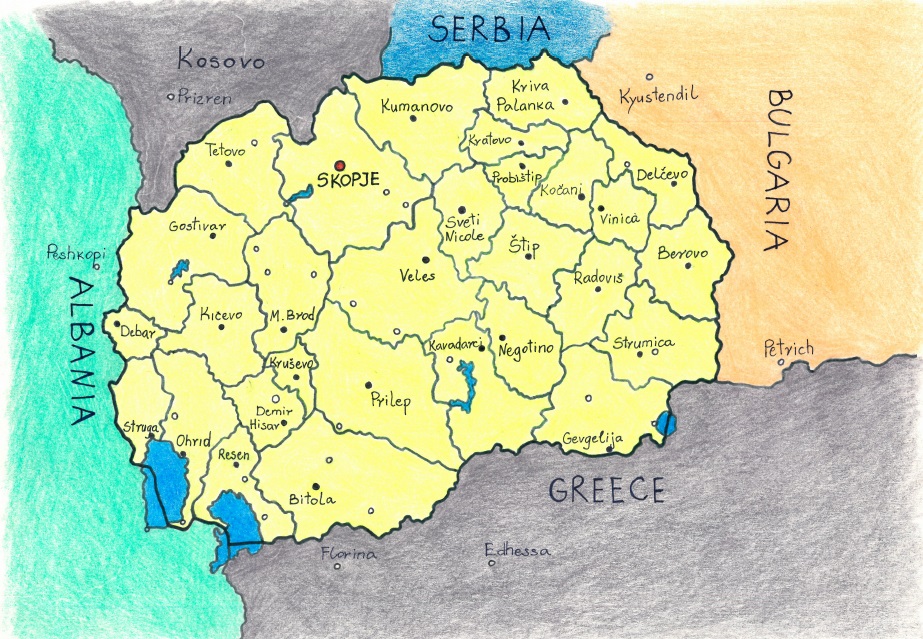
Macedonian, like the other Eastern South Slavic idioms has features which make it Portion of the Balkan sprachbund, a bunch of languages that share typological, grammatical and lexical features depending on areal convergence, rather then genetic proximity.
This paper investigates the linguistic landscape of Dubrovnik and Kotor within the Southeastern Adriatic coast, and Mytilene while in the north Aegean making an attempt a theorization of its conclusions at the intersection of (socio)linguistics, ethnography, and semiotics, which has acquired ground because the platform of selection in linguistic landscape (LL) analysis. I argue the influx of each tourists and refugees, despite the obvious variations in between the two groups, has experienced radical consequences for the LL that have to this point captivated just about no awareness from the suitable literature. And still, tourism as well as arrival of latest populations have significant and lasting consequences to the LL which often can only be sufficiently investigated by systematic ethnographic scientific studies from the semiotic indicates used in inscribing it.
Grammar of your language in the Slavic Macedonian populace composed by Georgi Pulevski in 1880 marks the initial attempt at standardisation for the Macedonian language during the Galičnik dialect. The period of time amongst 1840 and 1870, saw a battle to determine the dialectal base on the typical language known as simply "Bulgarian", with two opposing views emerging.
The comparison on the kinship conditions reveals that these methods are actually influenced by a unique diploma of convergent balkanization processes. As a result, 4 Balkan kinship systems share comparable properties in contrast to Greek This conclusion is significant for cross-linguistic typological research as the contrastive description with the kinship conditions developments the examine of the lexical-semantic typology of Balkan languages.
As Bulgarian, Macedonian and Albanian have grammatical evidential devices in addition, there is a question how the lexical evidential markers connect with evidential sorts. In this article the excellence concerning analytic and holistic examining is usually pretty practical, as it clarifies the role of every on the elements in constructions. Inside the write-up it really is analysed on the basis of tra...
This information analyses, inside the framework of cognitive linguistics, the usage of some H2o metaphors within the phraseology of a few Balkan languages, Albanian, Macedonian and Modern day Greek. H2o, which occupies a substantial position in human practical experience and perception, delivers a flexible framework for metaphorical expression in numerous aspects of human daily life. In phraseology, these metaphors are more likely to Engage in a vital part in conveying summary principles and cultural Concepts rooted within the expertise of h2o and its different manifestations inside the 3 Balkan languages.
Krste Petkov Misirkov's book Za makedonckite raboti (On Macedonian Matters) printed in 1903, was the primary attempt to formalize a separate literary language.[45] With the book, the author proposed a Macedonian grammar and expressed the purpose of codifying the language and employing it in colleges. The author postulated the theory which the Prilep-Bitola dialect be made use of like a dialectal foundation for the formation with the Macedonian standard language; his thought however was not adopted right up until the nineteen forties.
The most characteristic features with the Balkan Sprachbund is the way during which idiomatic phrases cross from one particular language to the next with these kinds of apparent relieve, and the way in which wherein they give this type of Balkan "fl avor" to every specific language. The gathering and Examination of such cases is an ongoing, and critical, contribution to our understanding of Balkan lifestyle and also the homo balcanicus. The main focus of such contrastive phraseology reports is primarily semantic. In contrast, my concentration Here's the phrase like a grammatical build, defi ned roughly for a "grammatically signifi cant team of tokens, the meaning of which it really is not possible to tag at the level of the person token". My illustrations are taken from Slavic (mainly Bulgarian), but because several characterize wellknown morphosyntactic "Balkanisms", the dialogue body is broader. Not all such phrases are specifi cally Balkan. Refl exive verbs, For example, which include a key verb variety along with a refl exive particle (like разбира се 'it really is comprehended') are located in non-Balkan South Slavic in addition.
Nonetheless, ethnography, as a methodological sociolinguistic Resource, are not able to substitute or supersede cognitive aspects of language. If executing LL investigation means executing semiotic landscape analysis, then we even have to contemplate semiosis and better-purchase indexicality qua categorization. I have an understanding of ethnographic LL investigation as contributing to a greater comprehension with the dynamic indexical relation in between language and Bodily space (become put by means of human company). Equally as a certain accent and unique morphosyntactic options may well index the place of origin of a speaker, a selected LL may perhaps index populations and their socioeconomic relations at a particular historic moment. Focusing on these dynamic indexical relations could possibly have far-reaching repercussions for superdiversity as a method of constructing sense of language-in-Culture.
The perfect tense might be formed applying both for being (сум) and to own (има) as auxiliary verbs. The 1st kind inflects the verb for person and makes use of a previous active participle: сум видел многу работи ("I've found lots of points"). The latter sort makes utilization of a clitic that agrees in variety and gender with the object with the sentence as well as passive participle of your verb in its uninflected sort (го имам гледано филмот, "I have witnessed that Film").
Similarly, a lot of compound verb types are found in equally Balkan and non-Balkan languages: these incorporate fantastic-like tense forms for example дошли сме 'We've occur' or бяхме дошли 'we experienced come' and modal-like long run varieties like ще дойда 'I will arrive' or щях да дойда 'I would have arrive / was about to appear'. Other compound verbs are more specifi cally Balkan. A person could be the Romance best, that's far better identified in Macedonian (e.g. имам доjдено 'I have come') but can be located in Bulgarian dialects. Probably the most properly-acknowledged, on the other hand, is definitely the renarrated temper, also called the evidential, which during the third person forms the phrase Ø дошли 'they [apparently] came'. The obvious typical characteristic to every one of these kinds is The mix of the auxiliary plus a major verb kind: while in the Bulgarian illustrations, the auxiliary is often a method of съм in the best-like tenses, a method of ща within the modal-like long run tenses, and zero in the third human being kinds of the renarrated.
And nonetheless, tourism as well as the arrival of recent populations have considerable and lasting outcomes to the LL which can only be adequately investigated by systematic ethnographic scientific tests from the semiotic signifies utilized in inscribing it.
Welche Sprache spricht man in Mazedonien?
Viele Menschen stellen sich die Frage: Welche Sprache spricht man in Mazedonien? Die offizielle und am weitesten verbreitete Sprache ist Mazedonisch. Sie wird von der Mehrheit der Bevölkerung als Muttersprache gesprochen und dient als Amtssprache in Verwaltung, Politik, Bildung und Medien. Im Mazedonien Sprache alltäglichen Leben ist Mazedonisch allgegenwärtig und verbindet Menschen unterschiedlicher Generationen.
Neben der mazedonischen Sprache existieren jedoch weitere Sprachen, die von ethnischen Minderheiten gesprochen werden. Besonders Albanisch nimmt eine bedeutende Stellung ein und wird in bestimmten Regionen auch offiziell verwendet. Diese sprachliche Vielfalt ist ein charakteristisches Merkmal Mazedoniens und zeigt die multikulturelle Struktur des Landes.
Mazedonische Sprache: Herkunft und Besonderheiten
Die Mazedonische Sprache gehört zur südslawischen Sprachfamilie und ist eng mit dem Bulgarischen und Serbischen verwandt. Trotz dieser Nähe besitzt sie eine eigenständige grammatikalische Struktur und einen eigenen Wortschatz. Geschrieben wird Mazedonisch mit dem kyrillischen Alphabet, das speziell an die Lautstruktur der Sprache angepasst wurde.
Ein besonderes Merkmal der mazedonischen Sprache ist ihre vergleichsweise einfache Grammatik im Vergleich zu anderen slawischen Sprachen. Bestimmte Artikel werden direkt an das Substantiv angehängt, was sie von vielen europäischen Sprachen unterscheidet. Diese sprachlichen Eigenschaften machen Mazedonisch sowohl einzigartig als auch interessant für Sprachwissenschaftler.
Sprache in Mazedonien: Alltag und Mehrsprachigkeit
Die Sprache in Mazedonien ist stark von Mehrsprachigkeit geprägt. Aufgrund der ethnischen Vielfalt des Landes werden im Alltag häufig mehrere Sprachen parallel verwendet. In vielen Städten ist es üblich, dass Menschen Mazedonisch und Albanisch oder andere Sprachen fließend sprechen.
Die mazedonische Verfassung erkennt die sprachlichen Rechte von Minderheiten an, was zu einem offenen und inklusiven Sprachsystem geführt hat. In Schulen, öffentlichen Institutionen und sogar im politischen Diskurs ist Mehrsprachigkeit fest verankert. Diese Praxis trägt dazu bei, den sozialen Zusammenhalt zu stärken und kulturelle Unterschiede zu respektieren.
Sprachentwicklung im Balkanraum: Historische Einflüsse
Die Sprachentwicklung im Balkanraum ist das Ergebnis jahrhundertelanger historischer Prozesse. Der Balkan war stets ein Schnittpunkt verschiedener Kulturen, Völker und Reiche. Diese kontinuierlichen Begegnungen führten dazu, dass sich Sprachen gegenseitig beeinflussten und gemeinsame Strukturen entwickelten.
Auch die mazedonische Sprache wurde durch diese Entwicklungen geprägt. Sie enthält zahlreiche Lehnwörter aus dem Türkischen, Griechischen und Albanischen. Gleichzeitig teilt sie grammatikalische Merkmale mit anderen Balkan-Sprachen, obwohl diese unterschiedlichen Sprachfamilien angehören. Dieses Phänomen macht den Balkan sprachwissenschaftlich besonders interessant.
Historische Entwicklung der mazedonischen Sprache
Die mazedonische Sprache wurde erst Mitte des 20. Jahrhunderts offiziell als eigenständige Sprache anerkannt. Im Jahr 1945 begann die Standardisierung, bei der eine einheitliche Grammatik und Rechtschreibung festgelegt wurden. Dieser Prozess war entscheidend Mazedonische Sprache für die Entwicklung einer modernen Literatursprache.
Seitdem hat sich Mazedonisch stetig weiterentwickelt und ist heute in Literatur, Journalismus, Film und digitalen Medien präsent. Die Sprache wurde zu einem wichtigen Symbol nationaler Identität und kultureller Selbstbestimmung.